The Trigger: Starting April 1, 2026, Windstorm Certificate of Compliance applications must be certified in accordance with either the 2024 International Residential Code (IRC) or the 2024 International Building Code (IBC). The Texas Department of Insurance announced this change to tighten standards for coastal properties and TWIA eligibility. If you're in Dallas, Tarrant, Denton, or Collin county, you may have skipped past this thinking it doesn't apply to you. That would be a mistake.
Why You Should Care, Even in Dallas
The 2024 IRC isn't just about windstorm protection. It's about building better. And North Texas foundations, which sit on clay that changes volume by up to 10% based on moisture content, have no margin for lazy design.
Here's what most homeowners don't understand: a code is a minimum standard, not a solution. Dallas and Fort Worth have adopted various versions of the IRC with local amendments, but adoption timing varies by jurisdiction. Some parts of the metroplex still permit designs to older standards. That means a house three blocks away from yours, built to a 2015 IRC, may have a shallower foundation, less reinforcement, and fewer design considerations for soil movement than it should.
The 2024 IRC tightens requirements for post-tension slab design, pier embedment depth, soil classification protocols, and drainage control measures. None of these are sexy topics. All of them matter when your foundation is bearing down on clay that will try to push it around every single year.
The Physical Reality Under Your House
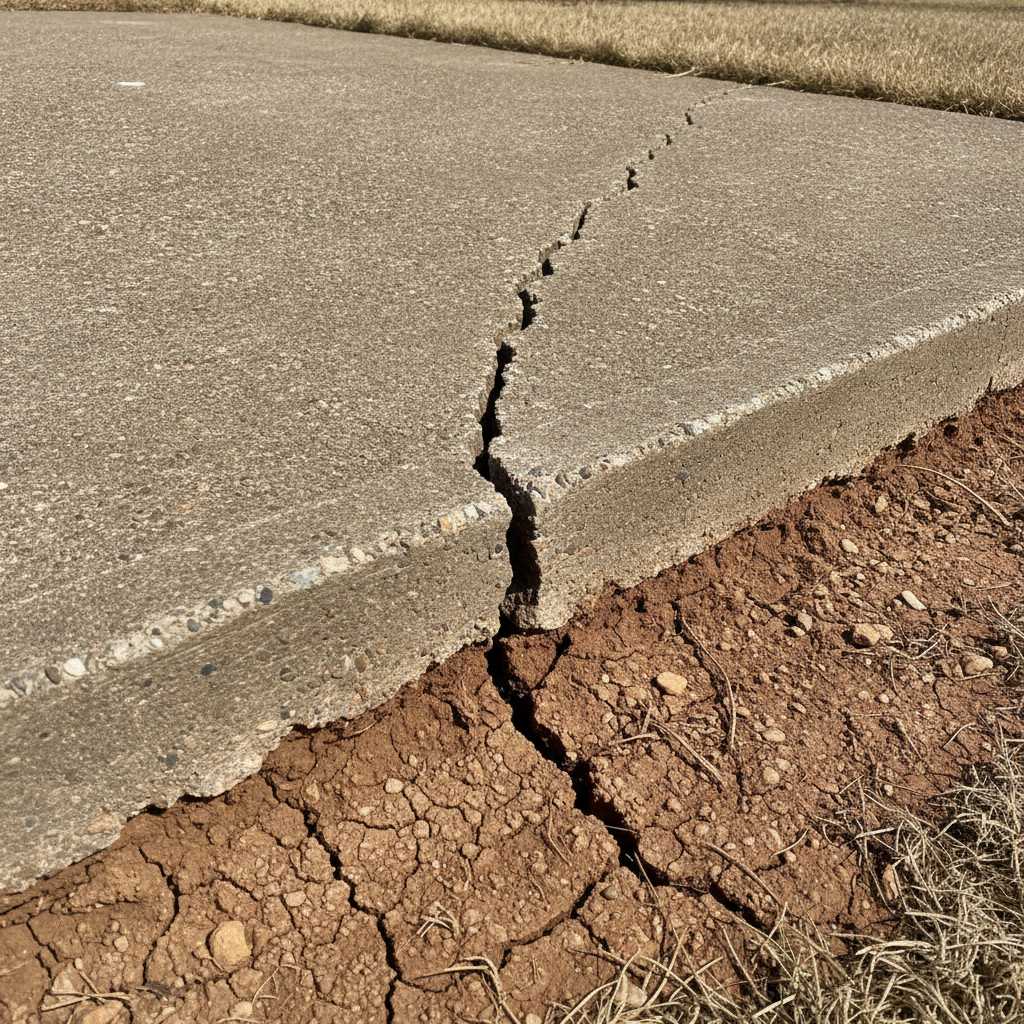
The dominant mechanism behind foundation failure in Dallas-Fort Worth is the shrink-swell cycle of expansive clay. During the hot, dry summers, the clay soil shrinks dramatically. When the wet winters and spring storms arrive, the soil rapidly absorbs moisture and swells back. This constant push and pull exerts enormous pressure on concrete slabs and pier-and-beam structures alike.
A foundation designed to 2015 standards might meet load calculations and lateral force requirements, but those calculations often assume more stable soil behavior than what actually happens in North Texas. Expansive clay soil movement compounds exponentially over time rather than linearly. Each cycle doesn't just add damage, it multiplies existing damage.
Better code means better design protocol. The 2024 IRC requires engineers to classify soil more rigorously before proposing a foundation system. It sets clearer minimum depths for post-tension slabs and pier foundations. It demands better documentation of subsurface conditions. These aren't safety theater: they're the difference between a house that slides half an inch per year for twenty years (cumulative 10 inches of differential movement) and one that stays relatively stable.
What This Means for You, Right Now
If you're building new: Insist that your engineer design to the 2024 IRC, even if your city hasn't officially adopted it yet. It costs nothing extra at the design phase. Your builder will claim your city's current code is "good enough." It isn't. Ask for a sealed PE foundation inspection report before closing, and make sure it documents the design standard used.
If you're buying: A standard home inspection identifies visible symptoms of foundation movement but does not constitute a structural evaluation. Only a licensed structural engineer (PE) can assess whether the foundation is stable, actively moving, or in need of repair. If a house was built under older code and shows any signs of movement, a structural engineering report is the only thing that will tell you the true story. Appraisers and lenders won't catch this; engineers will.
If you own now: Code updates don't retroactively require retrofit of older homes. But they do clarify what good design looks like. If your house was built to 2009 standards and you've noticed cracks or sticking doors, the problem isn't the code, it's that the foundation was under-designed for your soil. The fix isn't a rewrite of your deed; it's drainage management, moisture control, and if necessary, a professional repair based on a current engineering assessment.
The 2024 IRC doesn't guarantee your foundation won't move. Expansive clay guarantees that it will. What better code does is reduce the amount of movement you'll see, delay when repairs become necessary, and make sure any repair work is based on current understanding of how North Texas soil behaves.
Don't treat a code update like a headline. Treat it like a signal that the engineering community knows more about what works here. Use that knowledge.
Disusun dengan bantuan AI dan ditinjau terhadap sumber publik yang dirujuk di atas. Bukan pengganti inspeksi bersegel PE.